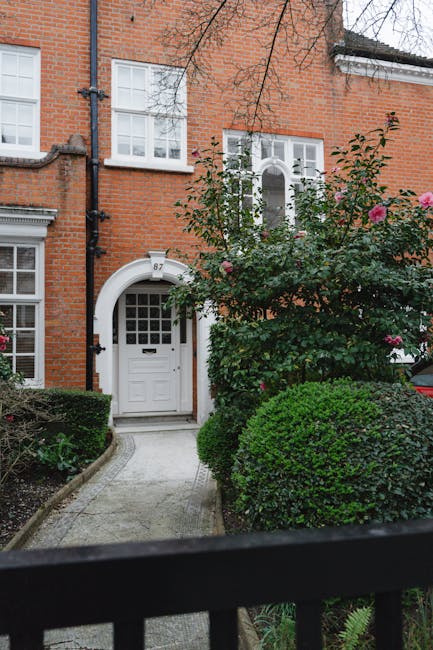
Pinner Village front garden makeover by local gardeners: a practical guide to a smarter, sharper entrance
There is something quietly powerful about a front garden done well. You notice it on the way past, sometimes without even clocking why it feels so inviting: the path is clear, the planting looks balanced, the hedge is neat, and the whole frontage sits comfortably with the house. A Pinner Village front garden makeover by local gardeners is not just about making things look pretty for a week or two. It is about improving how the property works day to day, how it handles shade, wind, rain, neighbours, pets, parcels, and the simple business of getting in and out without faffing around. That is the real value.
In Pinner Village, where homes often mix period character with busy modern living, the front garden has to do a lot of jobs at once. It needs to welcome visitors, frame the house, stay manageable through the seasons, and still feel personal. This guide breaks down how a front garden makeover actually works, what local gardeners focus on, where people tend to go wrong, and how to plan changes that will still look good long after the first tidy-up. If you want the short version: start with structure, then soften it with planting, and keep maintenance realistic. Simple enough. Not always easy.
Table of Contents
- Why it matters in Pinner Village
- How the makeover process works
- Key benefits and practical advantages
- Who it is for and when it makes sense
- Step-by-step guidance
- Expert tips for better results
- Common mistakes to avoid
- Tools, resources and recommendations
- Law, compliance, standards, or best practice
- Options, methods, or comparison table
- Case study or real-world example
- Practical checklist
- Conclusion
- Frequently asked questions
Why Pinner Village front garden makeover by local gardeners Matters
A front garden is the first thing people see, but it is also part of how a home feels to live in. In practical terms, a good makeover can improve access, drainage, privacy, and safety. In visual terms, it can make a tired property look cared for without overdoing it. That balance matters in a place like Pinner Village, where properties often have individual character and residents tend to notice the details. A scruffy frontage can make a whole house feel a bit flat; a well-planned one can lift it straight away.
Local gardeners are especially useful because they understand the kinds of issues that tend to show up in this part of London: compact plots, mixed soil conditions, boundaries that need careful handling, seasonal shade, and the desire for something handsome but not high-maintenance. They are used to planning around narrow paths, small parking aprons, and the kind of front garden that has to look good from both the street and the kitchen window. Truth be told, that local knowledge saves a lot of trial and error.
There is also the longer-term side of it. A front garden makeover is rarely just a one-off flourish. It should reduce work, not create it. If the design needs constant replanting, endless clipping, or endless weeding, it will quickly become a nuisance. The best makeovers are the ones that look intentional in January as well as June.
For ideas that suit small or low-fuss spaces, you may also find it useful to look at affordable low-maintenance garden ideas and ground cover plants ideal for UK gardens. Those two topics are often where a front garden redesign starts making sense.
How Pinner Village front garden makeover by local gardeners Works
The process usually starts with a site visit and a proper look at what is already there. That sounds obvious, but you would be surprised how many problems are caused by skipping this bit. A front garden makeover is not just a plant-shopping trip. Local gardeners usually assess access, sunlight, shade, soil condition, drainage, existing trees or hedges, boundary lines, and what the homeowner actually wants the space to do.
From there, they normally work through a few planning questions:
- Do you want a formal look, a cottage style, or something contemporary?
- How much maintenance can you realistically take on?
- Do you need privacy from the street?
- Will the garden need to work around bins, bikes, car access, or foot traffic?
- Is the soil dry, compacted, clay-heavy, or mixed?
Once that is clear, the design usually moves into structure first. That might mean reshaping beds, trimming hedges, improving the path, refreshing edging, or removing tired shrubs. After that comes the planting layer. This is where the space starts to feel alive again. Good local gardeners will often mix evergreen structure with seasonal interest so the garden does not look bare in winter.
For properties with awkward shade, an evergreen climber can make a big difference. If the frontage includes a fence or wall that needs softening, the ideas in evergreen shade climbers for dark corners can be surprisingly handy. If height and privacy matter, a neat hedge plan may be better, and fast-growing hedge options for privacy offers useful inspiration.
Finally, the garden is finished with the practical bits: mulching, edging, waste clearance, tidy transitions between hard and soft landscaping, and a maintenance plan. That maintenance plan is not decorative. It is what keeps the makeover looking like a finished project rather than a burst of enthusiasm that ran out of steam by autumn.
Key Benefits and Practical Advantages
A front garden makeover should do more than impress passers-by. Here is what a well-executed project usually improves.
- Kerb appeal: The house looks cared for, which often changes the feel of the whole street frontage.
- Usability: Clear paths, better planting layout, and smarter boundaries make everyday use easier.
- Lower upkeep: Replacing awkward plants or messy borders with smarter choices can reduce weekly chores.
- Better structure: The garden feels intentional, not accidental.
- Seasonal interest: A good scheme looks presentable in more than one season.
- Privacy and definition: Hedges, climbers, or boundary planting can make the front garden feel calmer.
- Property confidence: Even if you are not thinking about selling, a tidy frontage tends to make people feel better about the home itself.
There is a more subtle advantage too. A front garden that works well often makes the whole property feel easier to maintain. People tend to keep up with the rest of the house when the outside greets them properly. It sounds small, but it really isn't.
If your goal is low-drama upkeep, it helps to pair structure with durable planting and sensible maintenance routines. For example, a mix of evergreen shrubs, ground cover, and a few well-placed accents can be easier than a border full of delicate plants that sulk after every cold snap. The article on essential gardening tips for beginners is useful if you are trying to understand what makes a planting plan manageable rather than fussy.
Expert summary: the best front garden makeover is one that makes the property look better, function better, and stay easier to look after. If one of those three is missing, the design usually needs another pass.
Who This Is For and When It Makes Sense
This kind of project makes sense for a lot of homeowners, but the reasons vary. Some people want a clean, welcoming entrance because the front garden has become overgrown. Others want to replace a patchwork of tired shrubs with a more modern layout. Some simply want to stop spending every weekend pulling weeds and clipping back things that grow faster than expected. Nature, as ever, has opinions.
You may be a good fit for a front garden makeover if:
- your front garden feels cluttered, dim, or unbalanced;
- the planting looks patchy through winter;
- the hedge or shrubs are too big for the space;
- the path or edging is worn out;
- you need more privacy but do not want a fortress feel;
- you want a front garden that matches the style of the house;
- you are preparing a property for sale or rental presentation;
- you want a space that works better for bins, bikes, pushchairs, or pets.
It also makes sense if the garden is small. In fact, small front gardens can improve dramatically with the right plan because every line matters. A narrow plot can look much wider with better edging, cleaner planting blocks, and fewer visual interruptions. If that sounds familiar, innovative container gardening for small spaces is worth a look, especially when ground planting is limited.
And if the garden is already half-decent but just needs a seasonal reset, you may not need a full redesign at all. A tidy-up, selective pruning, fresh mulch, and a new planting rhythm can be enough. Sometimes the smartest move is restraint. Not everything needs a big dramatic overhaul.
Step-by-Step Guidance
Here is a practical way to approach a front garden makeover without getting overwhelmed.
- Assess the current layout. Walk from the street to the front door and notice what feels awkward, cramped, dull, or overgrown.
- Decide the main purpose. Is the space mainly for presentation, privacy, low maintenance, pollinator planting, or a mix of these?
- Clear the clutter. Remove dead material, self-seeded weeds, broken edging, and plants that no longer suit the scale of the garden.
- Protect the structure. Keep any healthy trees, useful hedges, or sound walls if they contribute to the design.
- Improve access. Paths should be clear, stable, and easy to use in wet weather.
- Build the planting framework. Use a mix of evergreen structure, seasonal colour, and lower ground cover where appropriate.
- Add finishing details. Edging, mulch, clean lines, and a tidy transition to hard surfaces can transform the look quickly.
- Set a maintenance rhythm. Agree what gets clipped, watered, deadheaded, or checked through the year.
A good local gardener will often suggest working in phases rather than doing everything at once. That can help with budget and avoids the common mistake of overplanting before you have seen how the space behaves through one full season. The light in January is not the light in July, and front gardens can surprise you.
For inspiration around structure and shape, the piece on stylish hedge shapes is helpful. If you are choosing between planting styles, a compact herb feature or even a small scented patch can be lovely near the front step, as long as it is practical. For that, see maintaining a flourishing herb garden.
Expert Tips for Better Results
A few small choices make a disproportionate difference. Local gardeners see this all the time, especially in front gardens where one awkward plant can dominate the whole view.
- Think in layers. Use taller structure at the back, medium planting in the middle, and lower edging or ground cover at the front.
- Keep one clear focal point. That might be a front door, a specimen shrub, a shaped hedge, or a neat path line.
- Use repetition carefully. Repeating a plant or material gives calm, but too much can look stiff.
- Choose plants for the actual conditions. Shady front gardens need different choices from exposed ones. Obvious, yes, but often ignored.
- Leave breathing room. Plants always grow. More than you think. Sometimes annoyingly so.
- Match the house style. A very modern layout can look jarring against a traditional frontage if it is not handled thoughtfully.
- Plan for winter interest. Evergreen structure, bark texture, berries, and tidy edging all matter when flowers disappear.
If the frontage is exposed to strong weather, a resilient plan is worth the effort. The article on windproof garden ideas and building a resilient garden against weather damage can help you think beyond just planting appearance.
And a small practical note: if you are unsure whether a plant will keep behaving itself, ask how it will look after two years, not two weeks. That question saves trouble.
Common Mistakes to Avoid
Front garden makeovers often go wrong in similar ways. The good news is that most of them are avoidable.
- Choosing plants purely for looks. Pretty at the garden centre does not always mean suitable for the site.
- Ignoring maintenance. A design that looks great only if it is clipped every fortnight is not low-maintenance.
- Overcrowding beds. Plants need room to mature without fighting for light and air.
- Neglecting drainage. Wet patches and compacted soil can quietly undermine the whole scheme.
- Forgetting boundaries. Hedges, fences, and front walls need to work with the planting, not against it.
- Mixing too many styles. A little variety is lovely. Too many ideas in one small space becomes visual noise.
- Leaving the path as an afterthought. If the access route looks tired, the whole front garden feels half-finished.
One of the most common issues, to be fair, is trying to make a small front garden do everything at once. Privacy, flowers, wildlife, storage, symmetry, and no maintenance? That is a lot to ask. Better to choose the priority and build around it. The rest can follow.
If weeds are already taking hold, it is worth dealing with them properly before any new planting goes in. A useful companion read is effective weed management tricks. Nobody loves that job, but it is much easier than undoing a weed-filled border later.
Tools, Resources and Recommendations
A front garden makeover uses a mix of practical tools and the right plant knowledge. You do not need a van full of specialist kit, but a few essentials make the work cleaner and safer.
- Hand tools: secateurs, loppers, trowel, hand fork, edging tool, and a sturdy rake.
- Cutting and shaping tools: hedge trimmers where appropriate, plus pruning saws for thicker woody stems.
- Ground prep tools: forks for breaking compacted soil, spades, and barrows for clearing waste.
- Finish tools: a good broom or blower for paths, and a wheelbarrow or bags for spoil removal.
- Soil improvement supplies: compost, mulch, and sometimes grit if drainage needs help.
Local gardeners will often also rely on practical judgment rather than gear. That matters. A useful tool is only useful if you know when not to overuse it. A hedge trimmer can save time, but the wrong cut can leave a shrub looking hacked rather than shaped. If that is a concern, hedge trimming in Pinner is the sort of specialist work where a careful hand usually wins over brute force.
For homeowners who like to understand the process before booking anything, it also helps to look at about the local team, general gardening services, and the practical guidance on pricing and quotes. That gives you a sense of how a project is usually scoped, even before the first spade goes in.
Law, Compliance, Standards, or Best Practice
A front garden makeover is mostly a design and maintenance project, but there are still some sensible compliance and safety points to keep in mind. These are not dramatic, but they matter.
First, if the work affects boundaries, shared access, drainage, trees, or visibility near the road, it is wise to check what is there before changing anything significant. Local gardeners should work carefully around boundary lines, paving, and any items that could affect sightlines or access. If a tree is involved, extra caution is sensible because tree work can be more complex than it looks from the pavement.
Second, reputable gardeners should follow sensible health and safety practice. That usually means using appropriate protective equipment, keeping tools in good working order, managing waste responsibly, and working in a way that does not create unnecessary risk for residents or neighbours. If you want to understand how a service provider approaches this, you can review health and safety policy information and insurance and safety details.
Third, privacy, accessibility, and surface safety are best treated as design priorities, not afterthoughts. A path that becomes slippery with leaf fall, a hedge that blocks a turning point, or a planting bed that spills onto an entrance can all create avoidable problems. Clean design is usually safer design. That is the simple truth of it.
Finally, if waste is removed or composted, best practice means handling it properly and not assuming everything can just be piled into one corner. The article on turning organic waste into nutrient-packed soil is useful for understanding how greener waste handling can fit into a maintenance routine.
Options, Methods, or Comparison Table
Not every front garden needs the same type of makeover. The best approach depends on budget, condition, and how hands-on you want to be.
| Approach | Best for | Typical strengths | Possible drawbacks |
|---|---|---|---|
| Refresh and tidy-up | Gardens that are mostly healthy but messy | Quick improvement, lower disruption, cost-effective | Limited change to layout or structure |
| Partial redesign | Front gardens with one or two problem areas | Balances value and impact, more tailored result | Needs clearer planning to avoid patchiness |
| Full makeover | Overgrown, awkward, or outdated front gardens | Most dramatic transformation, best for long-term improvement | More time, budget, and planning needed |
| Low-maintenance reset | Busy households or rental properties | Easy upkeep, clean look, fewer ongoing tasks | Can feel less lush if over-simplified |
In practice, many homeowners end up somewhere between a refresh and a partial redesign. That often gives the best balance. You keep the good bits, fix the problem areas, and avoid spending money on things that do not actually improve the space. Sensible, really.
If you are still deciding between hard landscaping and soft planting, landscaping services and lawn care support can help frame the decision. And if the front garden includes a small seating corner or paved area, a quick look at patio cleaning and decking services may be relevant too.
Case Study or Real-World Example
Picture a modest Pinner Village frontage with tired shrubs, a thin strip of lawn, a hedge that had grown uneven, and a path that always seemed to collect leaves. Nothing disastrous. Just a bit neglected. The homeowner wanted the place to feel welcoming without becoming a maintenance headache. Also, they were frankly tired of the front garden looking better in photographs than in real life.
The local gardeners started by clearing dead growth and checking which shrubs could stay. One side hedge was trimmed back into a cleaner line, the front border was reshaped to give the path more breathing room, and the planting was simplified with evergreen structure and a few seasonal highlights. A small amount of ground cover was added where weeds kept reappearing, and the soil was improved with compost and mulch. No fireworks. Just calm, practical decisions.
The result was not a theme-park transformation. It was better than that. The house suddenly felt more settled. The entrance was easier to use. The planting looked deliberate. Visitors could find the front step without doing that little awkward "is this the way?" pause. And perhaps most importantly, the space was easy to keep in shape after the work finished.
That kind of project is a good reminder that a front garden makeover does not need dramatic features to succeed. Sometimes the most noticeable change is that the garden stops demanding attention and starts giving it back.
Practical Checklist
Use this checklist before and during a front garden project.
- Have I decided the main purpose of the front garden?
- Do I know which existing plants are worth keeping?
- Is the path clear, safe, and visually tidy?
- Do the chosen plants suit shade, wind, and soil conditions?
- Have I allowed space for mature growth?
- Is there a sensible plan for hedge and border maintenance?
- Will the design still look good in winter?
- Do I need privacy, screening, or a softer boundary?
- Have I included a waste-clearance plan?
- Is the final layout realistic for the time I can spend on upkeep?
If you can answer most of those confidently, you are already ahead of many rushed makeovers. If not, no problem. That is what planning is for.
Conclusion
A Pinner Village front garden makeover by local gardeners works best when it is treated as a practical design job rather than a decorative one. The strongest results come from understanding the site, choosing plants that fit the conditions, making access easy, and building a look that can survive the seasons without constant fuss. That is the kind of garden people notice in a good way, then keep noticing because it still looks right months later.
Whether your frontage needs a light refresh, a structural tidy, or a full rethink, the key is to keep the plan honest. Match the design to the house, the weather, and your actual routine. That is where local expertise earns its keep. Not in flashy promises, but in making the space better to live with.
Get a free quote today and see how much you can save.
If you are ready to take the next step, start with a short conversation, a few photos, and a clear idea of what bothers you most about the space. The rest usually follows once the right plan is on the table. And sometimes, that is the nicest part of all.
Frequently Asked Questions
What does a front garden makeover usually include?
It usually includes clearing overgrowth, reshaping beds, improving planting, tidying paths and edging, and adding structure that makes the space easier to maintain. Some projects also include hedge trimming, soil improvement, and waste removal.
How much work is involved in a Pinner Village front garden makeover?
That depends on the condition of the garden. A simple refresh may take little more than pruning and replanting, while a full makeover can involve layout changes, hedge work, and more extensive preparation. A site visit usually gives the clearest answer.
Can local gardeners help with a small front garden?
Yes, and small gardens often benefit a lot from professional planning. Clean lines, compact planting, and the right scale make a surprisingly big difference in a limited space.
What plants work well for a low-maintenance front garden?
Evergreens, ground cover, and sturdy shrubs are often good choices because they provide structure through the year and usually need less attention than more delicate planting schemes. The exact mix depends on sun, shade, and soil.
How do I make my front garden look tidy all year round?
Keep the structure simple, use evergreen planting as a backbone, and avoid overcrowding. Regular edging, seasonal pruning, and a bit of mulching also help the garden look cared for even when flowers are scarce.
Is hedge trimming part of a front garden makeover?
Very often, yes. A hedge can shape the whole frontage, provide privacy, and give the garden a clean frame. When hedges are too large or uneven, trimming is usually one of the quickest ways to improve the look.
Do I need landscaping as well as gardening?
Sometimes. If the garden needs new paths, boundary work, surface changes, or stronger structural features, landscaping may be the better fit. If the main issue is planting and maintenance, gardening work alone may be enough.
What is the biggest mistake people make with front garden makeovers?
The biggest mistake is often choosing plants or features without thinking about maintenance. A garden that looks lovely but is awkward to look after tends to slip back quickly.
How long does it take for a newly made-over front garden to settle in?
Usually at least one full growing season. The first few weeks tell you whether the layout works, but the real test is how the space looks after plants have established and the weather has changed a few times.
Can a front garden makeover improve privacy without blocking light?
Yes. Careful use of hedges, climbers, and layered planting can soften views from the street without making the front of the house feel closed in. It is all about balance.
What should I ask a local gardener before starting?
Ask how they would approach the site, which plants they would keep or remove, how much maintenance the design will need, and what the plan is for waste and aftercare. Those questions usually reveal a lot.
Do I need to think about safety and insurance?
Yes, especially if the work involves tools, tree work, boundary changes, or heavy clearance. It is sensible to check that the service provider works safely and has the appropriate cover in place.
Can I phase the project instead of doing it all at once?
Absolutely. In many cases, phased work is the smarter route. It spreads cost, reduces disruption, and gives you time to see how the space behaves before making the next decision.
Where can I learn more before booking?
You can explore service information, pricing guidance, and related garden articles to get a clearer sense of what you need before moving ahead. That usually makes the first conversation much easier.